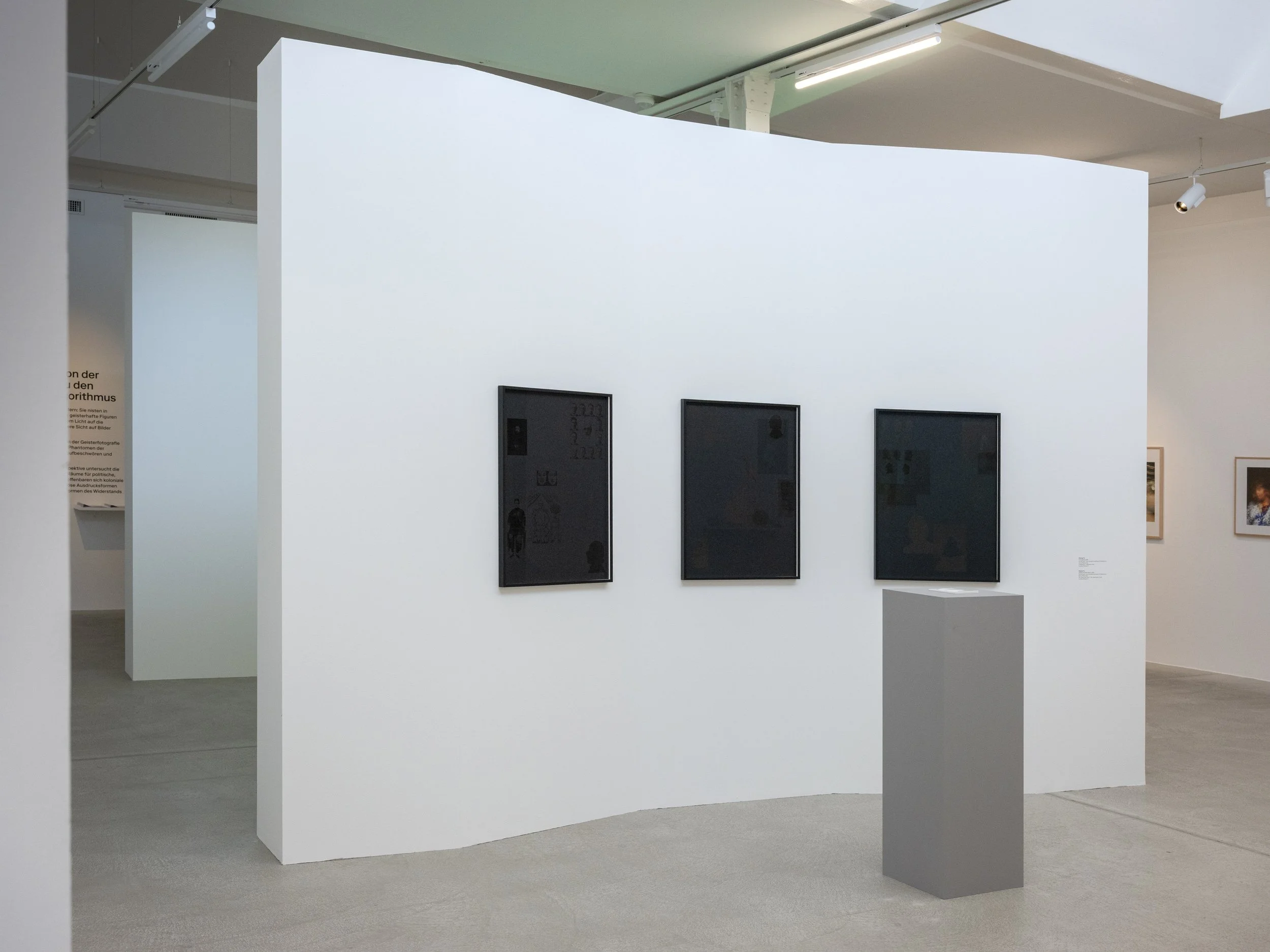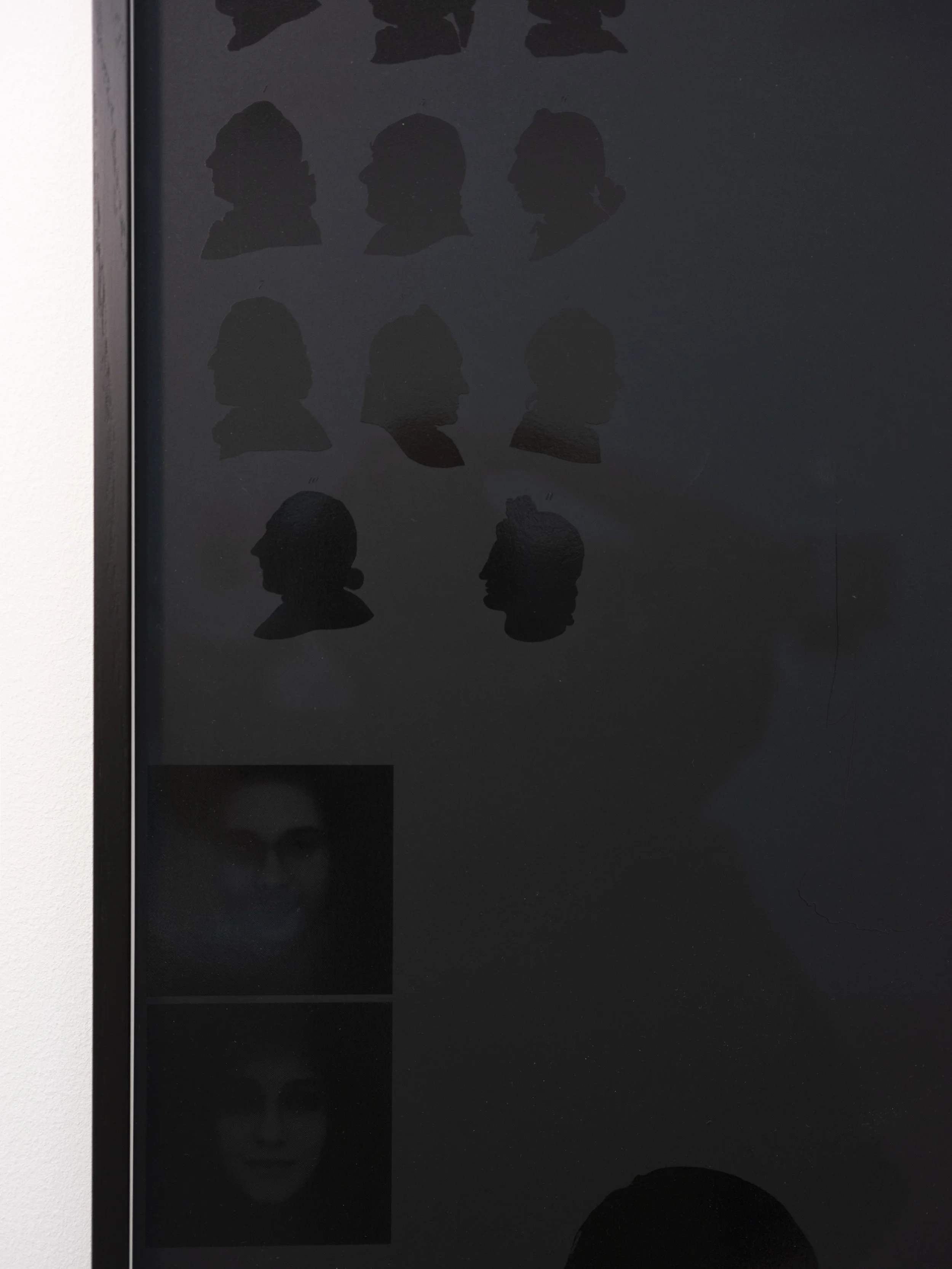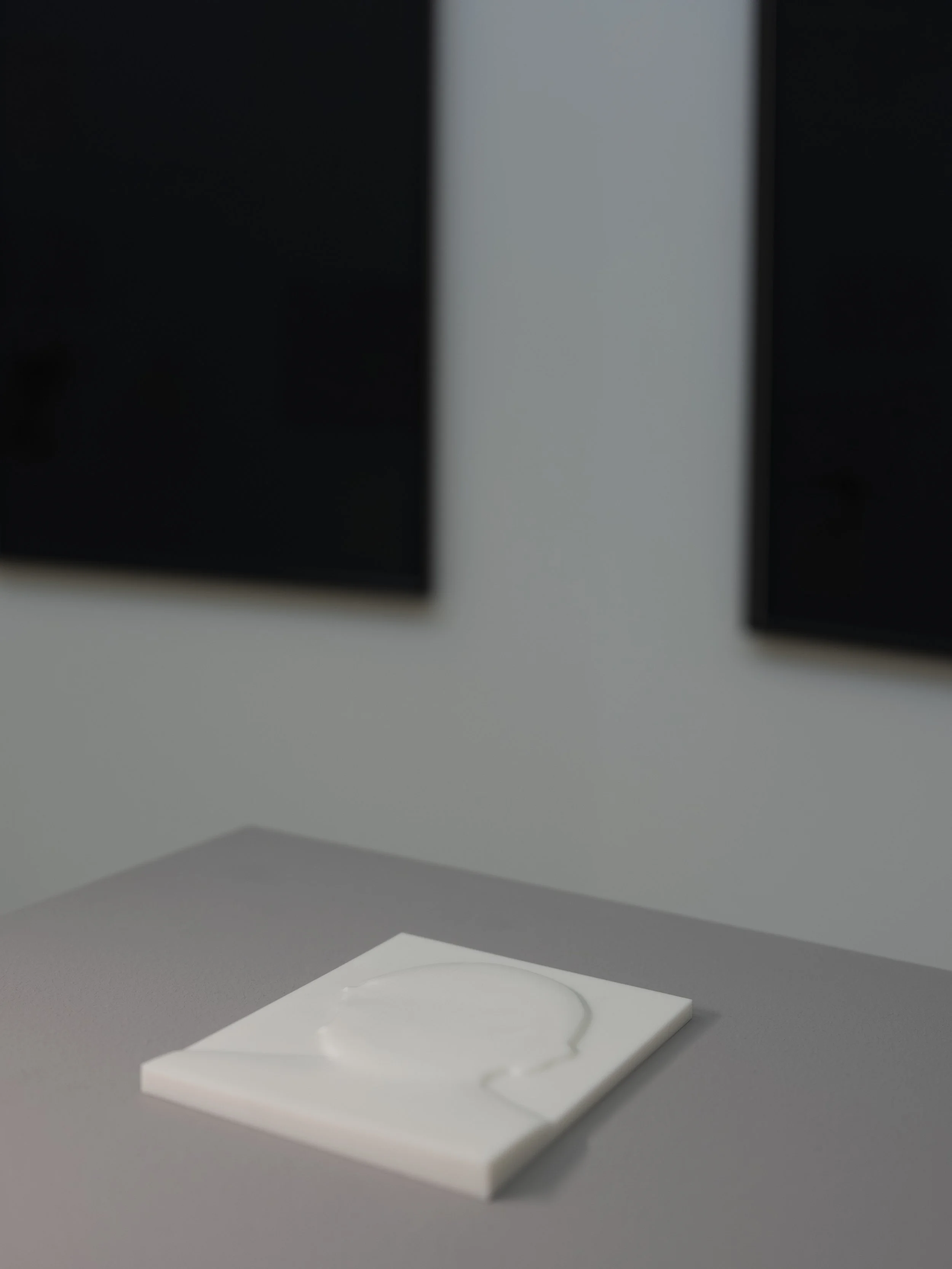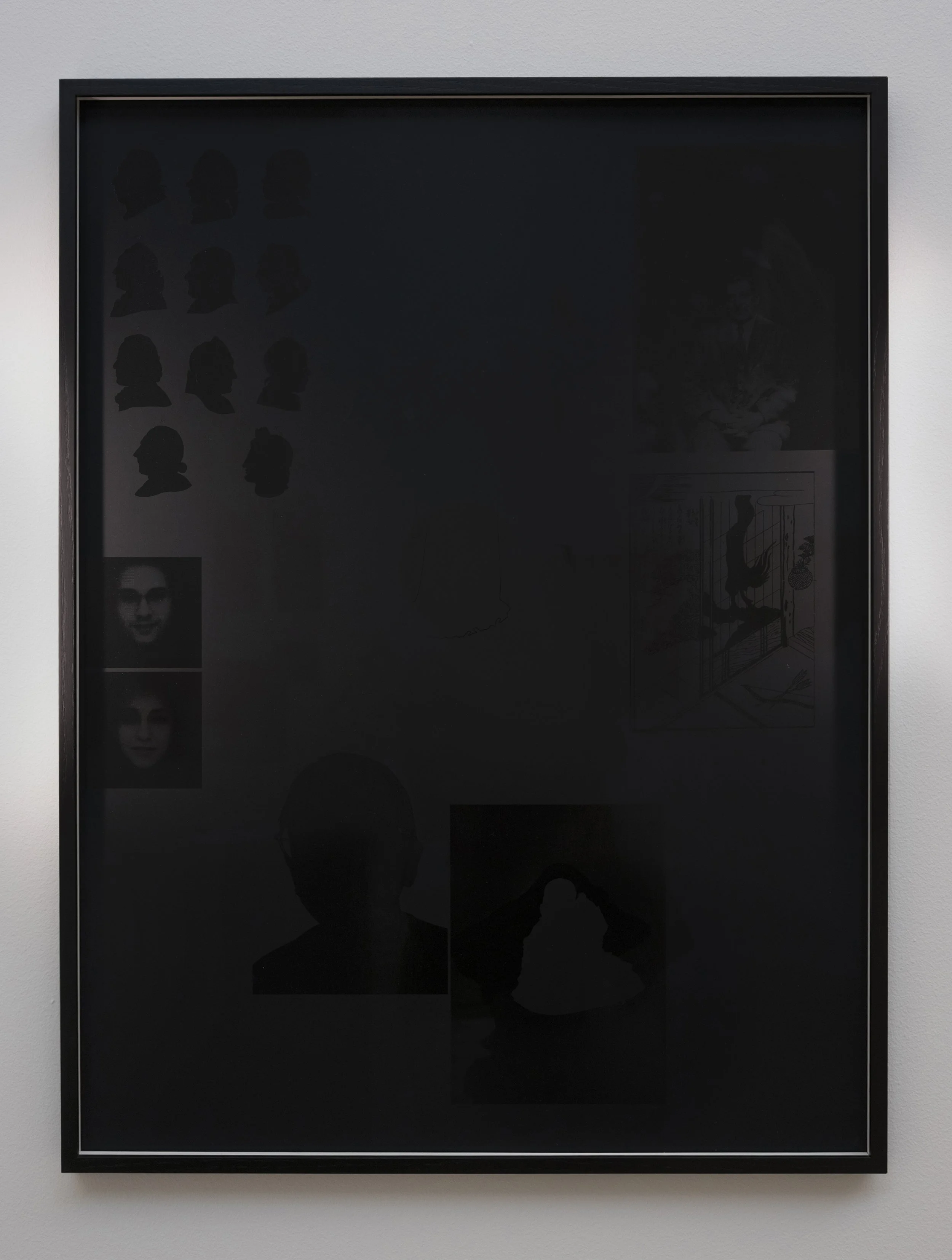
Scia-graphy (2026)
Contrary to the Greek roots and Western-dominated origins of the term photography as ‘light drawings’, its naming in China in the mid-19th century was informed by the tradition of portraiture and finally settled on ‘capturing shadows’. Starting from this tension between shadow and light, the work explores the use of silhouette as a language of divination, referencing his broad study of the representation of the human face through photography and digital imaging systems. Across cultures, the face has long been treated as a site of prediction: East Asian face reading claims to reveal destiny, while, in the West, the science of physiognomy has been rightfully discredited because of its violent, racist and classist use in the contexts of Nazi Germany and colonialism. Nevertheless, it resurfaced through data-driven facial recognition systems that claim to be objective but instead reinforce bias. I subjects my own face to multiple predictive regimes – physiognomy, East Asian face reading, facial recognition, phenotyping and synthetic facial generation – blending the occult aesthetics of divination with the scientific facade of machine learning.
By juxtaposing these practices, the work exposes their shared logics and challenges the automation bias behind what I call ‘Western face reading’, revealing how both systems shape potent, often unexamined narratives about identity.
(written with Rea Gruenenfelder from Fotomuseum Winterthur)
Captions of each image in the work is available online via the handouts in the exhibition.
I wrote an accompanying article to elaborate on the naming of photography -seizing shadow - in Hong Kong: Light Drawings and Shadow Portraits
The project was exhibited at Fotomuseum Winterthur (CH).
The artist would like to thank Frame Contemporary Art for their kind support.